About IBA
Wharton School of the University of Pennsylvania and the University of Karachi set up the Institute of Public and Business Administration in 1955 with the mission to create managerial capital and leadership for the industry of Pakistan. The institute introduced two graduate degree programs in Pakistan, namely, Master of Public Administration in 1955 and Master of Business Administration (MBA) in 1956. Since then, more than 8000 people have graduated MBA from IBA, many becoming prominent leaders, including the President of Pakistan (Mr. Mamnoon Hussain), Prime Minister of Pakistan (Mr. Shaukat Aziz), and members of top management teams in national and international business enterprises.
IBA became a degree-awarding institution in 1994 by the charter of the Sind Assembly. To manage its organic growth as a university having approximately 5000 students, IBA divisionalized in 2021 by establishing three autonomous and independent schools, namely, the School of Business Studies (SBS), the School of Economics and Social Sciences (SESS), and the School of Mathematics and Computer Science (SMCS).
The MBA program is now part of the portfolio of the SBS and managed through the Directorate of MBA and EMBA.
The IBA MBA
Since 1956, the MBA has been the legacy and flagship program of IBA. The current MBA is a two-year, full-time, rigorous master's program in business administration designed for rising professionals with 3-8 years of experience who are positioned to advance into strategic management roles.
It serves as an accelerator for ambitious individuals transitioning from technical expertise to management leadership, from individual contribution to team leadership, from functional specialization to general management.
The program equips you with the knowledge, analytical frameworks, and leadership capabilities essential for advancing your career in Pakistan's most dynamic organizations.
You'll develop proficiency in key business disciplines, analytical decision-making, ethical leadership and teamwork, effective communication, and strategic use of technology in management.
This comprehensive skill set positions you among the next generation of leaders shaping Pakistan's corporate future.
The MBA is not just a degree—it is professional transformation that accelerates your journey from functional expertise to strategic leadership
Joining the MBA means becoming part of an ever-growing community of professionals committed to driving innovation, enhancing organizational competitiveness, and increasing the productivity of Pakistan's economy.
The MBA has been designed using the benchmarks of leading business schools worldwide.
IBA introduced the MBA to Pakistan in 1956, establishing the standard by which all MBA programs in the country are measured.
The AACSB accreditation is international acknowledgment that the program has been rigorously evaluated and meets world-class standards.
It is a testament that the MBA not only has the legacy of pioneers but also holds the currency of leaders.
The MBA at IBA develops the whole professional through an eclectic mix of pedagogical methods including the case method, problem-based learning, and experiential engagement.
The program is built around the DRIVEN framework—Discipline, Reason, Integrity, Value-Added impact, Excellence, and Nobility—while developing your Technical, Intellectual, Emotional, and Social capabilities (TIES).
This dual framework ensures you develop both the analytical rigor and the leadership maturity required for strategic management positions.
IBA provides financial assistance to eligible students through various sources including need-based aid, merit-based scholarships, and corporate sponsorships.
For financing options available at IBA, please see
Financial Assistance at IBA.
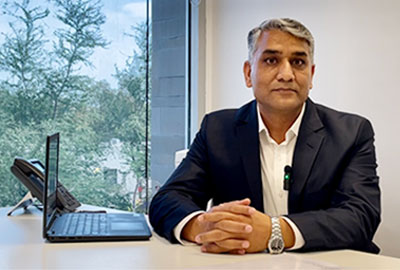
Message from Program Director
As business enterprises navigate digital transformation, sustainability imperatives, and geopolitical shifts, the demand for versatile, strategic leaders continues to intensify. The MBA remains uniquely positioned to develop such leaders—not despite its century-long history, but because of its multidisciplinary foundation and inherent capacity to evolve with emerging knowledge and practice.
IBA introduced the MBA to Pakistan in 1956 with assistance from Wharton, establishing the standard by which management education in the country is measured. Today, IBA-SBS is an AACSB-accredited business school continuing that legacy of innovation. We have fundamentally redesigned our MBA and Executive MBA programs—from philosophy to pedagogy—to address the grand challenges facing Pakistan and the global economy: sustainable industrial growth, digital transformation, and organizational resilience in an era of unprecedented uncertainty.
Read More
Program Structure
The MBA has been carefully designed to accelerate the transition of rising professionals from functional expertise to strategic management positions in Pakistan's most dynamic organizations. The program develops a comprehensive set of Technical, Intellectual, Emotional, and Social capabilities (TIES) guided by the DRIVEN framework of Discipline, Reason, Integrity, Value-Added impact, Excellence, and Nobility—the essential competencies that distinguish professionals who advance into strategic leadership from those who remain in functional roles.
Additionally, the program provides the foundation and qualification to study beyond the MBA, if you choose to do so. The MBA is an accredited qualification of Level-7 in accordance with the National Qualification Framework of Pakistan (NQFP), enabling graduates to proceed directly to doctoral programs.
The program requires the completion of 60 Credit Hours in accordance with NQFP, spread over two years of full-time study. The core of the program comprises more than half of the total Credit Hours and covers rigorous scientific knowledge pertaining to business disciplines, economics, organizational behavior, and quantitative analysis. The first year is dedicated to building this comprehensive foundation through academic and experiential training.
By the completion of the first year, you will be well-versed in how organizations function strategically and ready to develop a personalized portfolio of expertise. During the second year, you will build your specialized knowledge by choosing from a carefully curated menu of elective courses aligned with your career trajectory. Additionally, you will engage in experiential interactions with our partner enterprises and undertake the MBA Capstone Project, applying your strategic frameworks to solve a significant real-world business challenge.
Overall, the MBA will equip you with the following strategic management competencies:
-
Knowledge of Business and Management:
You will develop the ability to analyze how organizations create value, compete in markets, and navigate complex local and global environments—essential for strategic management roles.
-
Analytical Decision Making:
You will learn the science and art of making rational decisions under conditions of complexity and uncertainty, and implementing them effectively across organizational levels.
-
Ethical Leadership and Teamwork:
You will develop the ability to lead teams, build cross-functional collaboration, and influence stakeholders—critical capabilities for advancing beyond individual contribution.
-
Effective Communication:
You will develop the ability to communicate strategic ideas persuasively to diverse audiences, from technical teams to senior leadership.
-
Technology-Enabled Management:
You will learn how modern technologies and tools can be harnessed to drive organizational efficiency, innovation, and competitive advantage.
In summary, the MBA provides a unique blend of rigorous academic training and practical application that accelerates your advancement into strategic management positions in medium and large business enterprises.
Mentorship
The MBA offers a comprehensive faculty mentorship program where every student is paired with an experienced faculty advisor who provides personalized guidance throughout the program. Your mentor helps you navigate academic challenges, develop your professional capabilities, and make strategic career decisions—creating a relationship that often extends into a lifelong professional connection.
International Immersion
International immersion is a core component of the Executive MBA program. MBA students may join the EMBA international immersion on a space-available basis, subject to availability and payment of full cost participation. This optional experience provides exposure to global business practices, leading organizations, and international management contexts—valuable for professionals building global career perspectives.
Accommodation
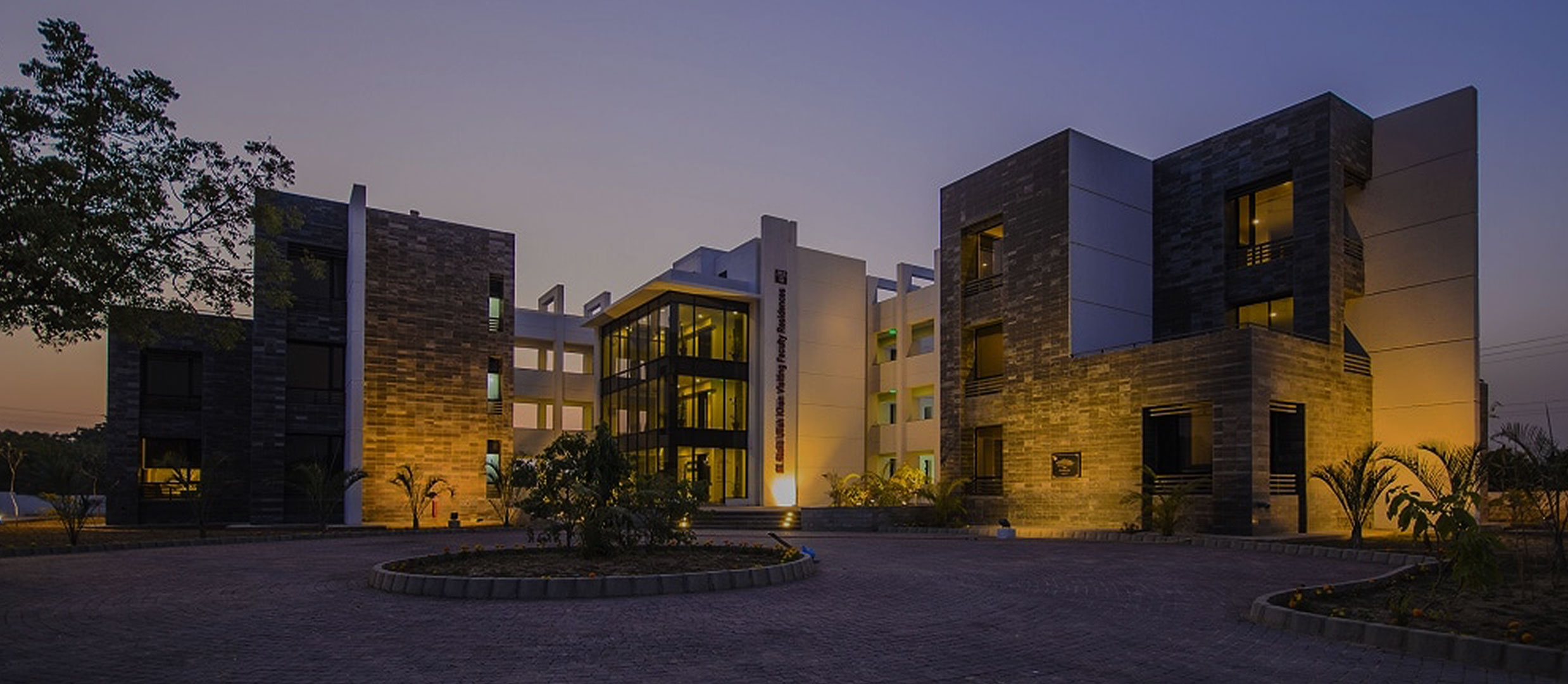
IBA owns separate hostels for ladies and gents for single, double, and triple occupancy. The hostels are directly managed and guarded by the administration and security departments of IBA. All students of full-time programs, who come from outside Karachi, are eligible for hostel accommodation, subject to the availability of space and hostel policy of the university.
Fee and Financing
The program fee is fixed for the whole program and divided into installment payments. The total fee for the 2026-28 cohort is as follows:
| |
Pak Rupees
|
|
Application Processing and Aptitude Test
|
10,000 |
|
Admission Fee
|
115,000 |
|
Business Orientation Program (BOP)
|
50,000 |
|
Program Fee (all-inclusive)
|
2,850,000 |
|
Total
|
3,015,000 |
Program fee is received in four equal portions, each payable before the start of each semester, regardless of the number of courses and projects in the semester. The fee for repeating a course or project is charged separately and determined based on the prevailing total program fee, total credit hours, and the credit hours of the course/project being repeated.
The MBA program does not offer any specific financing facility, but qualified students may access financial support through IBA's central financial assistance programs. For details on available options, eligibility criteria, and application procedures, please see Financial Assistance at IBA.
Admission
Candidates for MBA are considered eligible for admission if they have earned an undergraduate degree (equivalent to 16 years of education) from an HEC-recognized university with a CGPA of 2.5 or higher, and possess a minimum of 3 years of post-qualification professional experience.
The MBA is designed for rising professionals with 3-8 years of experience who are positioned to advance into strategic management roles. We take great pride in providing personalized attention to the development of each student. Accordingly, we select a small, highly competitive cohort every year. We seek ambitious individuals who demonstrate the attitude, aptitude, and professional trajectory to advance into strategic leadership positions.
We encourage you to carefully assess your career stage and aspirations before applying for admission. Our screening and selection process is highly competitive, rigorous, and selective. We believe in diversity and inclusivity and use academic and professional merit as the only criteria for selection based on evidence related to the following:
- Academic qualifications (Minimum 16 years of education)
- Professional experience (3–8 years post-undergraduate degree)
- Personal statements of purpose and value-added
- Two letters of recommendation
- Score in GMAT/GRE or IBA Aptitude Test
- Interview
The schedule of key milestones in program commencement includes the following:
| |
Round 1
|
Round 2
|
Round 3
|
|
Online Forms Availability
|
October 01, 2026 |
January 01, 2027 |
April 01, 2027 |
|
Form Submission Deadline
|
December 09, 2026 |
March 08, 2027 |
June 09, 2027 |
|
Issuance of Admit Cards
|
December 14 - 16, 2026 |
March 15 - 17, 2027 |
June 14 - 16, 2027 |
|
Aptitude Test Date
|
December 20, 2026 |
March 21, 2027 |
June 20, 2027 |
|
Aptitude Test Result
|
December 29, 2026 |
March 30, 2027 |
June 29, 2027 |
|
Interviews*
|
January 09, 2027 |
April 10, 2027 |
July 10, 2027 |
|
Announcement of Final Result
|
January 13, 2027 |
April 14, 2027 |
July 14, 2027 |
|
Admission Package
|
February 12, 2027 |
May 03, 2027 |
July 26, 2027 |
|
Business Orientation Program (BOP)**
|
July - August, 2027 |
July - August, 2027 |
July - August, 2027 |
|
Commencement of Classes
|
August 23, 2027 |
August 23, 2027 |
August 23, 2027 |
|
* The interview dates are subject to change; the provided dates are only for reference purposes.
**BOP will commence and end prior to the regular semester.
|
Apply
If you are planning to apply for admission, we strongly recommend submitting your profile for assessment of eligibility before applying. The link for submission of profile for preliminary assessment is provided below. If you believe that you are eligible for the program, you are welcome to apply without profile assessment. Please note that profile assessment is free but application processing requires a fee which is non-refundable.
Applications are accepted only electronically. Please arrange digital copies of following documents to attach with the application form:
- Personal photograph (Compliant with ICAO standards)
- Academic degrees and certificates (Digital copies of the original)
- Experience certificates (Digital copies of the original)
- Contact details of referees
Please submit your profile or application through the following links:
Directorate of MBA and EMBA
Room 211
AMAN CED Building
IBA Main Campus
University Road, Karachi
Phone: 021-38104700 (Ext: 2884)
E-mail: mba.info[at]iba.edu.pk